
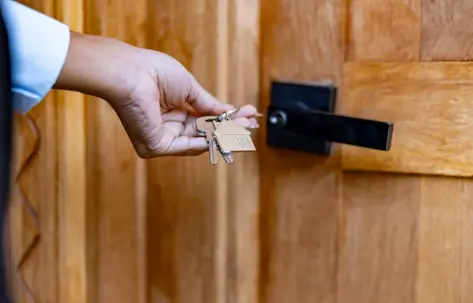
You come home to find your key doesn't work anymore. Or your spouse tells you flatly that you're not welcome back. It's one of the most common fears during a contentious separation — and one of the most common tactics some spouses try. The good news: in California, this almost never works the way the spouse doing it thinks it will.
The Short Answer: No, Not Without a Court Order
California is a community property state, and that status carries real weight when it comes to the family home. Both spouses generally have an equal right to occupy the marital residence during a divorce, regardless of whose name is on the deed, the mortgage, or the lease. One spouse cannot unilaterally decide to change the locks, remove the other's belongings, or otherwise force them out — not because it's rude, but because it's not legally effective, and it can seriously backfire on the spouse who tries it.
This holds true even if:
- Only one spouse's name is on the title or lease
- The home was purchased before the marriage but has since become community property through mortgage payments or improvements made during the marriage
- One spouse has already moved out voluntarily
- The couple is separated but hasn't yet filed for divorce
The right to occupy the home stays in place until a judge specifically orders otherwise — not until one spouse simply decides they've had enough.
Automatic Temporary Restraining Orders (ATROs)
The moment either spouse files a divorce petition in California, a set of Automatic Temporary Restraining Orders (ATROs) goes into effect automatically — no separate request required. These orders restrict both parties from certain unilateral actions while the case is pending, including transferring or disposing of property outside the normal course of business.
While ATROs are most often discussed in the context of finances and property, changing locks or otherwise interfering with a spouse's access to the family home can run afoul of their spirit, and a judge who sees this kind of behavior during a divorce is unlikely to view it favorably — particularly when it comes time to decide who gets exclusive use of the home going forward.
What If My Spouse Actually Does It?
If you find yourself locked out despite the law being on your side, here's what actually helps:
- Call the police for a civil standby. Officers won't resolve the underlying legal dispute, but a civil standby can get you safely back into the home to retrieve belongings or simply regain access while you sort out next steps. Responding officers may also directly tell the spouse inside that they cannot legally exclude you.
- Don't retaliate. Changing the locks back, removing your spouse's things, or showing up in a way that could be seen as confrontational can undermine your position — even when you're legally in the right. Courts pay close attention to who escalated a situation.
- Document everything. Save texts, voicemails, or emails where your spouse threatens to lock you out, admits to changing the locks, or refuses to give you a key. This kind of documentation matters if you need to go to court.
- Go back to family court. You can request an emergency (ex parte) order requiring your spouse to let you back in and provide a key, particularly if you have nowhere else to stay. In more serious situations, this can be combined with a request for temporary custody or financial orders if those are also at issue.
- Consider whether this rises to the level of abuse. If the lockout is part of a broader pattern of controlling, threatening, or harassing behavior, it may support a Domestic Violence Restraining Order (DVRO) request — which can include its own exclusive-use provisions, discussed below.
The One Legitimate Way a Spouse Can Be Excluded: A Court Order
There absolutely is a legal path to excluding a spouse from the family home — it just requires a judge, not a locksmith. This generally happens in one of two ways:
Exclusive use and possession orders. As part of a divorce case, a judge can grant one spouse the sole right to live in the home while the case is pending, particularly when both spouses trying to remain under one roof has become unworkable or unsafe. This is a formal request made to the court, not something either spouse can decide on their own.
Domestic violence restraining orders (move-out or "kick-out" orders). If a spouse has engaged in abuse, threats, or behavior that qualifies under California's Domestic Violence Prevention Act, the other spouse can request a restraining order that includes a move-out provision requiring the abusive spouse to leave the home immediately, sometimes on an emergency basis with very little notice.
The distinction matters: one process addresses a housing logistics problem during a civil divorce, and the other addresses a safety problem tied to abuse. Both require going through the court — neither is triggered by simply changing the locks.
Comparing the Two Legal Paths
| Exclusive Use & Possession Order | DVRO Move-Out Order | |
|---|---|---|
| Basis | Practical necessity, conflict, or logistics | Abuse, threats, or fear for safety |
| How fast | Can be requested on a regular or expedited basis | Can be granted on an emergency (ex parte) basis |
| What it requires | A hearing where the judge weighs both parties' circumstances | A showing of abuse under the Domestic Violence Prevention Act |
| Who initiates | Either spouse, as part of the divorce case | The spouse seeking protection |
| Additional relief | May address the home only, or be paired with other requests | Can include custody, firearm restrictions, and stay-away orders |
Does Moving Out Voluntarily Change Anything?
A common misconception is that once a spouse moves out — even temporarily, even to cool down after an argument — they give up their right to return. That's generally not true. Voluntarily leaving the home doesn't waive your ownership or occupancy rights, and your spouse still cannot legally change the locks on you simply because you're not currently living there, absent a court order saying otherwise.
That said, if you do move out, it's worth thinking carefully about the practical and legal implications — including how it may affect arguments later about who should have exclusive use of the home, and how community property issues like mortgage payments get handled in the meantime.
Why This Matters Beyond Just Getting Back In
Beyond the immediate stress of being locked out, this kind of situation can have ripple effects on the broader case:
- A spouse who tries to force the other out through self-help tactics, rather than going through the court, may damage their credibility on other contested issues
- Custody evaluators and judges often view controlling behavior around the home as relevant to a party's overall conduct during the case
- Financial issues, like who's paying the mortgage while excluded from the property, can become their own point of dispute (courts sometimes address this through reimbursement claims when one spouse has exclusive use of a shared asset)
Minella Law Group Can Help
📞 Call Minella Law Group today at (619) 821-2313 to schedule a confidential consultation.
📝 Prefer email? Fill out our online contact form and a member of our legal team will get in touch with you promptly.
Disclaimer: This article is for informational purposes only and does not constitute legal advice. For personalized guidance on your case, contact a licensed California family law attorney.
Frequently Asked Questions
1. Can my spouse legally change the locks and lock me out during a California divorce?
Whether a spouse can exclude the other spouse from the home depends on the circumstances and any existing court orders. Simply filing for divorce does not automatically give one spouse exclusive possession of the residence. A court can, however, issue orders giving one spouse exclusive use and possession of the home.
2. What should I do if my spouse changes the locks while our divorce is pending?
Avoid escalating the situation or forcing your way into the residence. Document what occurred and determine whether any court orders affect possession of the home. Depending on the circumstances, you may need to seek a court order addressing temporary use and possession of the residence and access to personal belongings.
3. Does it matter whose name is on the deed or lease?
Yes, ownership and lease rights can be relevant, but whose name appears on the deed or lease is not necessarily the only consideration during a divorce. Property characterization, occupancy rights, existing court orders, and other circumstances can affect whether one spouse may exclude the other from the residence.
4. Can a California family court order one spouse to move out of the house?
Yes. Depending on the circumstances, a family court can issue an order granting one spouse exclusive use and possession of the residence. Different legal requirements may apply depending on the type of relief requested, particularly when a request is connected to allegations of domestic violence or immediate harm.
5. Can my spouse lock me out if there is a domestic violence restraining order?
Potentially. A domestic violence restraining order can include a move-out or stay-away order requiring one spouse to leave the residence and prohibiting that person from returning. The specific terms of the court's order control, so it is important to carefully review any temporary or permanent restraining orders that have been issued.