
adoption in california
Understanding the ways families grow through adoption
-
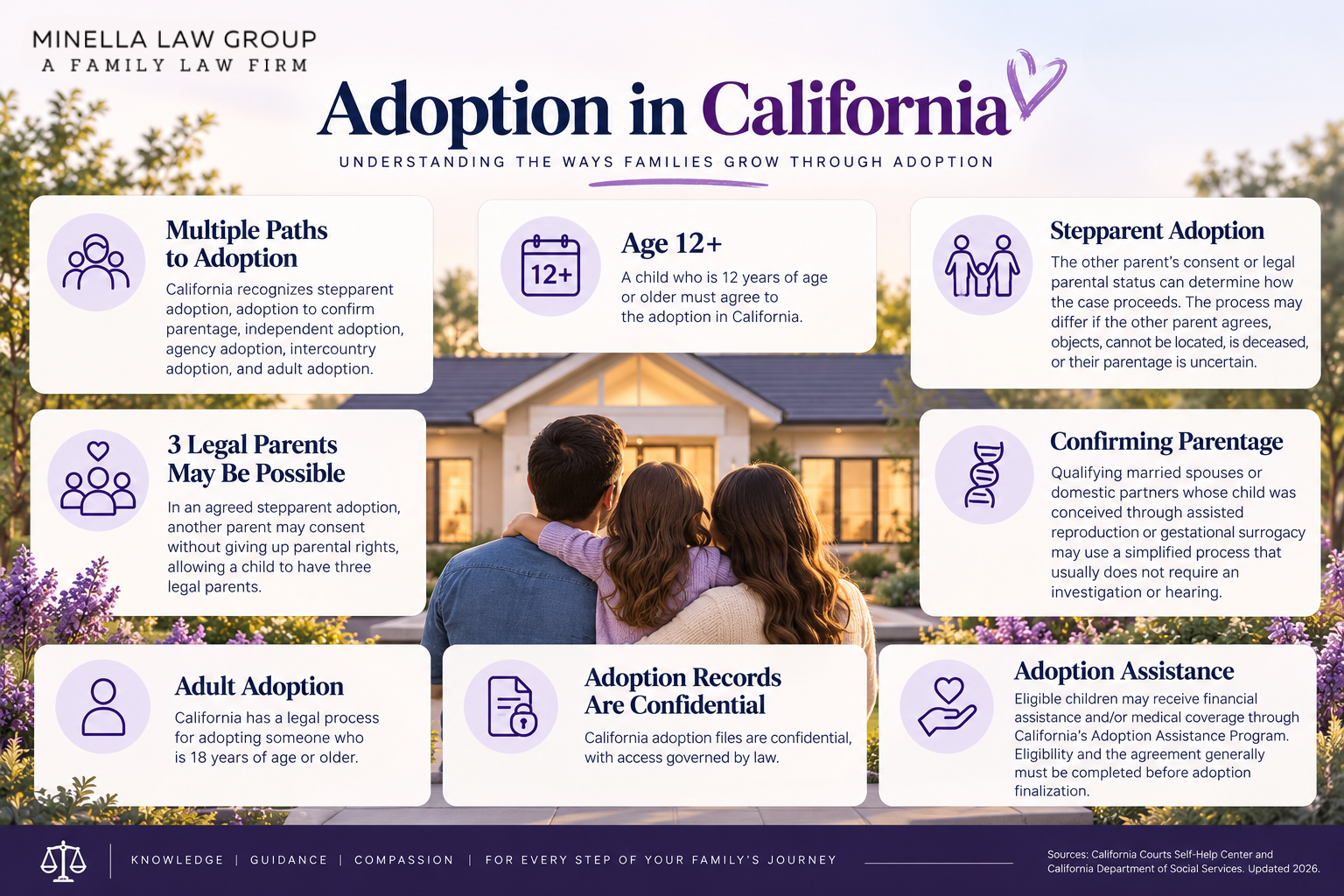
Adoption Assistance
Eligible children may receive financial assistance and/or medical coverage through California’s Adoption Assistance Program. Eligibility and the agreement generally must be completed before adoption finalization.
-
Adoption Records Are Confidential
California adoption files are confidential, with access governed by law.
-
Adult Adoption
California has a legal process for adopting someone who is 18 years of age or older.
-
Confirming Parentage
Qualifying married spouses or domestic partners whose child was conceived through assisted reproduction or gestational surrogacy may use a simplified process that usually does not require an investigation or hearing.
-
3 Legal Parents May Be Possible
In an agreed stepparent adoption, another parent may consent without giving up parental rights, allowing a child to have three legal parents.
-
Stepparent Adoption
The other parent’s consent or legal parental status can determine how the case proceeds. The process may differ if the other parent agrees, objects, cannot be located, is deceased, or their parentage is uncertain.
-
Age 12+
A child who is 12 years of age or older must agree to the adoption in California.
-
Multiple Paths to Adoption
California recognizes stepparent adoption, adoption to confirm parentage, independent adoption, agency adoption, intercountry adoption, and adult adoption.
Essential Guides to adoption in california




stepparent & partner adoption
Stepparent and partner adoptions can be relatively straightforward in some families, and significantly more complicated when another legal parent cannot be located or does not consent.



modern families, parentage & confirmatory adoption
resources for LGBTQIA+ families, donor conception, surrogacy, and confirming legal parentage



-
Adopting Children From Other States — Navigating Interstate Requirements
-
When a Social Worker Recommends Against Adoption — What It Means
-
Legal Options When an Adoption Agency Withholds an Adoption
-
How Child Support Works After Adoption
-
Rights of Foster Parents in the Adoption Process
-
Comprehensive Adoption Support Services in California
Official california adoption resources
Find trusted, up-to-date information from the california courts.
-
 California Courts - Adoption Self-Help CenterCurrent information on California adoption types and procedures.
-
California Adoption FormsAccess to most up-to-date forms, including ADOPT-300, ADOPT-203, ADOPT-210, and other forms.
-
California Adoption Assistance ProgramLearn about potential financial assistance and medical coverage for eligible adopted children.
-
San Diego County Adoption ResourcesLocal court information, forms, and resources for San Diego families.

Every family's circumstances are different. Our California family law attorneys can help you understand your options and guide you through the adoption process.
Adoption Resources
At Minella Law Group, we understand that adoption is a lifelong commitment and a wonderful journey, but it’s also a legal process. Every year in America, thousands of families are formed via adoption – while there are many factors to consider, these resources are a great starting place.
Quick Facts
Adoption is the process that establishes a legal and permanent parent-child relationship with someone that is not a child’s biological or legal parent. Unlike guardianship or other systems designed for the care of the young, adoption is intended to effect a permanent change.
- Single and married people are eligible to adopt
- You do not have to own a home or make a lot of money to qualify
- There are many forms of financial assistance and free classes available to help families adopt
- Adoptions can occur either between related family members or unrelated individuals
- More recent data from the U.S. indicates about 50% of adoptions are currently between related individuals
- Infertility is the main reason parents seek to adopt children they are not related to
- There are “safe-haven” states in which infants can be left, anonymously, at hospitals, fire departments, or police stations within a few days of birth – California is one
Open Adoptions. Allow identifying information to be communicated between adoptive and biological parents and, perhaps, interaction between kin and the adoptee
Closed Adoptions. Confidential and seals all identifying information, maintaining it as secret and preventing disclosure of the adoptive parents’, biological kin’, and adoptees’ identities.
San Diego Specific Resources:
-
Our Clients Say It Best
-
About Minella Law Group